
New to padel? Good news: you don’t need to spend a fortune to get started.
Your racket is the most important piece of kit you’ll own, but you don’t need to buy one on day one. At cwrt.club, we have rackets available to hire, so you can turn up, try the game and work out what suits you before spending anything on your own.
When you’re ready to buy, this guide covers what to look for.
Start with the shape
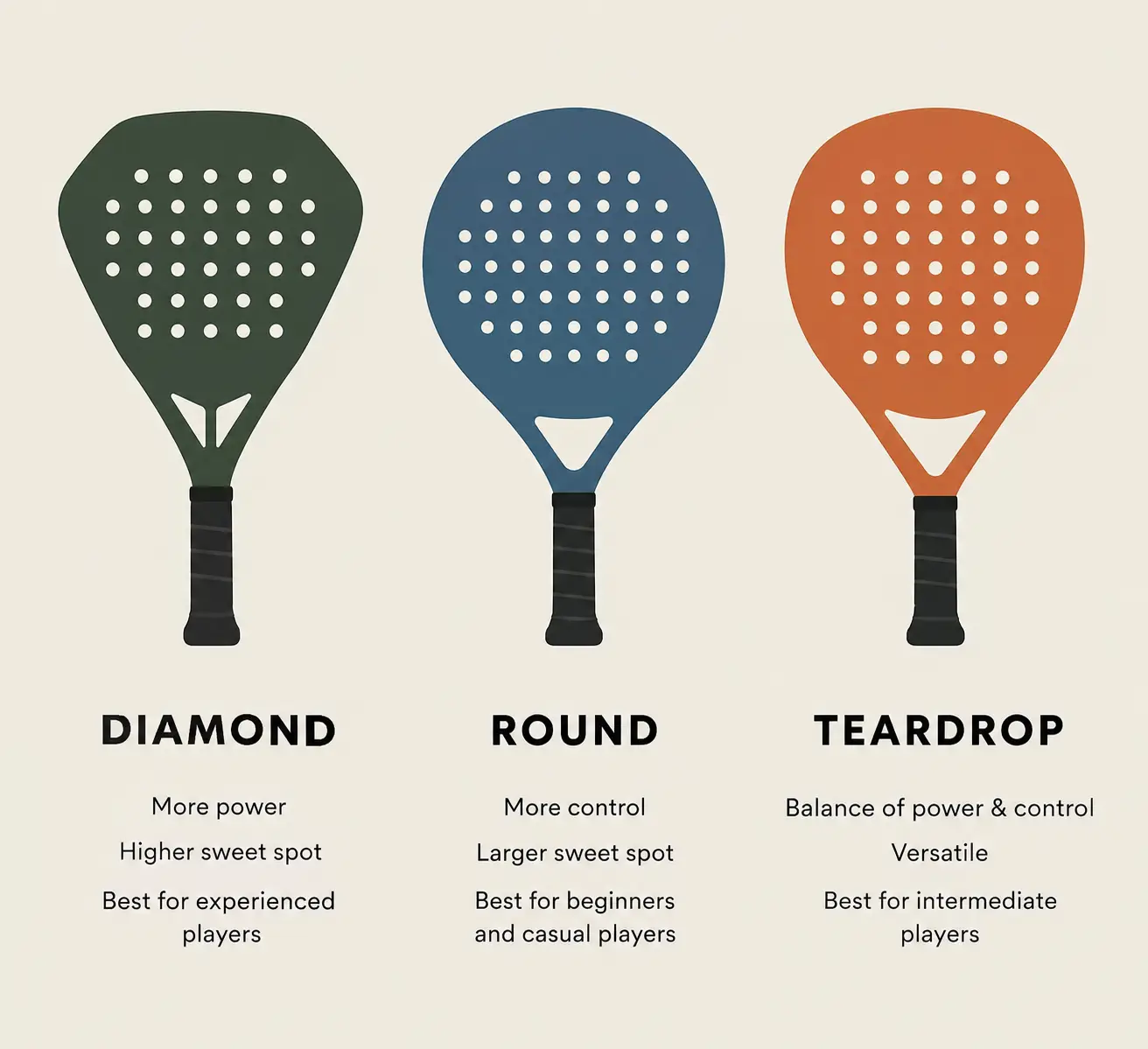
Padel rackets come in three basic shapes, and each one suits a different style of play.
- Round: Gives you more control and consistency. It suits players who like longer rallies and a steadier, defensive game.
- Teardrop: The all-rounder. It balances control and power, which suits players who mix attack and defence.
- Diamond: Adds speed and power to your shots. It suits attacking players, and it’s less forgiving, so it’s usually better once you’ve got some experience.
If you’re new, go for a round or teardrop. Both help you keep the ball in play and build confidence.
Think about weight
Most padel rackets weigh between 340g and 390g, and the weight changes how the ball comes off the strings.
- Lighter (340–360g): More control, less power. It’s also easier on the arm.
- Heavier (370–390g): More power, less control. It’s generally better suited to advanced players.
For beginners, a mid-weight racket of around 360–370g is a good starting point, with a decent mix of power and control.
Hardness matters too. A harder racket gives you more control but a firmer feel on contact. A softer one gives you more power and absorbs more of the shock.
Top tip: If you get arm pain or aches when you play, try a lighter, softer racket. It reduces the impact on your arm.
What’s it made of?
Every racket has a core (inside) and a surface (outside), and both affect how it plays.
Core
- Foam: A softer feel with more power.
- EVA: A firmer feel with more control.
Surface
- Fibreglass: Flexible, easy to control and forgiving.
- Carbon or graphite: Lightweight but firmer.
A few extras are worth knowing about:
- Rough surface: Helps you put spin on volleys and smashes.
- Hole pattern: Bigger holes mean more spin, while smaller holes give more stability.
- Anti-vibration technology: Absorbs shock and reduces strain on your arm.
Don’t forget the sweet spot
The sweet spot is the part of the racket face where you’ll get the best contact.
- Large sweet spot: More control and consistency, and more forgiving when you don’t hit it cleanly.
- Small sweet spot: More power, but you lose control when you miss it.
- Elliptic sweet spot: A mix of the two.
The best racket for beginners
If you want a simple answer, look for:
- A round or teardrop shape
- A mid-weight frame (around 360–370g)
- A large sweet spot
- A foam core and fibreglass surface, which feel more forgiving
Ready to give it a go?
You don’t need your own kit to get started. Come down, hire a racket and join in. Whether you’re a complete beginner or just curious, there’s a place for you on our courts.
See you on cwrt
The cwrt.club team